
The Psychology of Flow in Flappy Typer
Why Flappy Typer so easily triggers a flow state — the psychology of challenge-skill balance and instant feedback, and why it helps learning.
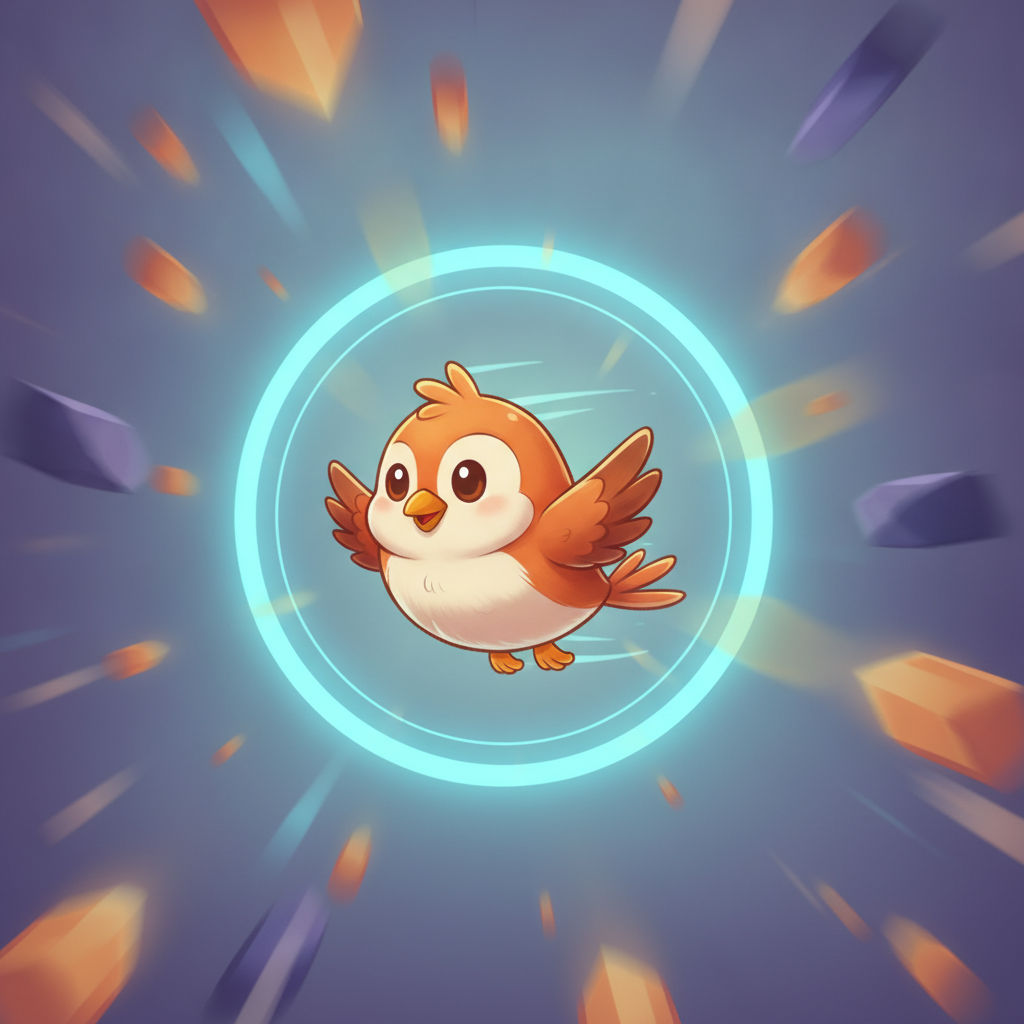
That feeling of "time flew by" — where you stop counting the score and just play — is a real psychological state, not a random occurrence. Here's why Flappy Typer triggers that state so easily.
What flow actually is
Psychologist Mihaly Csikszentmihalyi described flow as a state of complete immersion in an activity, where challenge and skill are nearly perfectly matched. It doesn't happen in activities that are too easy (boring) or too hard (frustrating) — only in that sweet spot that demands your full engagement.
Why Flappy Typer hits that sweet spot
Auto-scaling difficulty means the game continuously adjusts to your current skill — not so easy you get bored, not so hard you get frustrated and quit. That's exactly the condition that produces flow.
Why instant feedback matters
Flow requires clear goals and immediate feedback. Flappy Typer gives both: the goal (staying airborne) is completely clear, and the feedback (fly or fall) is instant — no delay or ambiguity.
Why this psychological state helps learning
In a flow state, self-consciousness decreases and engagement increases — both conditions favorable to skill acquisition. When you stop counting and just type, you're practicing exactly the automatic, subconscious reaction that genuine touch typing is built on.
Try it yourself
Play at learntype.app/games/flappy-typer and notice how quickly you stop tracking score and just get absorbed in play.
FAQ
Is "flow" a scientifically established concept, or just a marketing term? It's a well-established psychological concept researched for decades across many activities, not just gaming.
What if I don't enter a flow state? That's completely normal — flow doesn't happen every session, and the game provides valuable practice even without it.
Does higher difficulty make it less enjoyable? Generally not, if it's well matched to your current skill — which is why auto-scaling difficulty works better than a fixed level.
Written by
LearnType Editorial Team
Typing Education Editors
The LearnType Editorial Team produces and reviews typing curricula for English, Bangla (Avro & Bijoy), and Hindi. Our lessons and guides are developed with experienced typing instructors and aligned to real government typing-test standards, including SSC, CPCT, and state-level exams.
Keep reading
More in Typing Games
Flappy Typer for Arabic Mobile Typing Practice
Flappy Typer works with Arabic prompts on mobile too, but only desktop play builds genuine Arabic 101 keyboard muscle memory. Here's the difference.

Flappy Typer Daily Practice Routine for Arabic Learners
A daily practice structure combining Flappy Typer with structured Arabic lessons — warm-up, new material, and pressure-based reinforcement.

Flappy Typer for Arabic Accuracy vs Speed Training
Why accuracy matters even more than usual when playing Flappy Typer with Arabic prompts, given the added challenge of visual letter recognition.