
Common Mistakes Beginners Make When Learning Arabic Touch Typing
Eight common mistakes that slow down Arabic touch-typing beginners — from looking at the keyboard to rushing harakat — and how to avoid each.
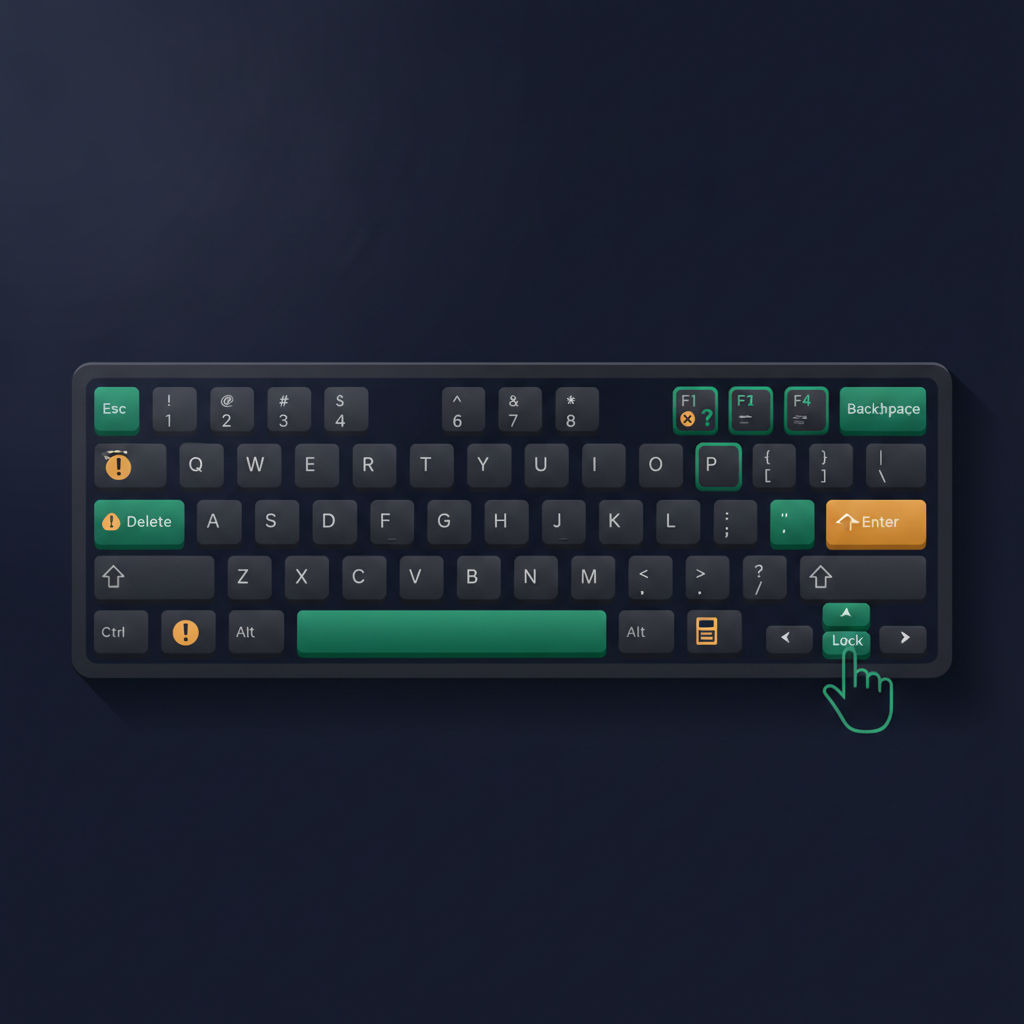
Most people who quit learning Arabic touch typing don't quit because it's too hard — they quit because a few avoidable mistakes made it feel harder than it actually is. Here are the ones that show up most often, and how to sidestep each.
1. Looking at the keyboard
The single most common mistake, and the most damaging one. Every glance down to check a key position is a small vote against building real muscle memory — your fingers learn key positions by feel, and looking down short-circuits that process every time. If you're serious about touch typing, cover the keyboard or use a course that structurally prevents you from seeing key labels while drilling.
2. Learning letters in alphabetical order instead of by keyboard position
Arabic's alphabetical order (alef, ba, ta, tha...) has nothing to do with where letters sit on the Arabic 101 keyboard. Learners who try to memorize the alphabet and the keyboard simultaneously, in the same order, end up confusing two unrelated sequences. Keyboard-position order — home row first, regardless of alphabetical order — is what actually builds typing speed.
3. Trying to learn harakat too early
Vowel marks are Shift-layer characters needed far less often than the base alphabet in everyday writing. Beginners who try to master harakat alongside the home row are adding real complexity to the hardest, most foundational stage of learning — better to build a solid base alphabet first and add harakat once typing without looking is already comfortable.
4. Practicing with random character strings instead of real words
Drilling "شسيبلاتنمك" repeatedly builds isolated key-finding speed but does very little for practical typing, since real text has patterns, common letter combinations, and meaning that random strings lack. Practicing real words and sentences from the start builds a more transferable skill.
5. Inconsistent, marathon-style practice
A single exhausting two-hour session on a Sunday teaches your fingers far less than short daily practice across the week — fatigue degrades precision, and motor memory consolidates through spaced repetition, not cramming. See our daily practice routine guide for a structure that avoids this trap.
6. Confusing Arabic Phonetic and Arabic 101 conventions
Arabizi digit conventions (2=ء, 3=ع, 7=ح) and the Arabic 101 physical keyboard are two entirely separate systems. Learners who mix the two — expecting Arabic 101 muscle memory to help with phonetic input, or vice versa — end up more confused than if they'd kept the two clearly separated in their practice.
7. Rushing past the home row
Because the home row's eight letters feel "basic," many beginners push forward to the top and bottom rows before their home-row muscle memory is fully automatic. This consistently backfires — a shaky home row undermines every later stage, since your fingers should be able to return there confidently between every keystroke.
8. Giving up before the "automatic" threshold
There's a real, noticeable point in touch typing where key-finding stops requiring conscious thought and becomes automatic — but it takes consistent practice to reach, and progress can feel slow right up until it happens. Many learners quit in the weeks just before this threshold, when the payoff was close.
Avoiding these mistakes
A structured, sequenced course does most of this avoidance work for you by design. LearnType's Arabic 101 and Arabic Phonetic courses use progressive lesson unlocking specifically to prevent skipping ahead of your own muscle memory, with live accuracy tracking that flags exactly which keys you're mistyping.
FAQ
Is it normal to feel like progress has stalled at some point? Yes — plateaus are a normal part of motor-skill learning, and they usually resolve with continued consistent practice rather than signaling something is wrong with your approach.
Should I use a keyboard cover or stickers while learning? Covering the keys (or using a course that hides key labels) is more effective long-term than stickers, since stickers can become a crutch that delays true touch-typing independence. See our full comparison of stickers vs touch typing for more.
How do I know if I'm making one of these mistakes? The clearest signal is whether you're still looking at the keyboard regularly, or whether your practice consists mostly of isolated drills rather than real words and sentences — both are fixable the moment you notice them.
Written by
LearnType Editorial Team
Typing Education Editors
The LearnType Editorial Team produces and reviews typing curricula for English, Bangla (Avro & Bijoy), and Hindi. Our lessons and guides are developed with experienced typing instructors and aligned to real government typing-test standards, including SSC, CPCT, and state-level exams.
Keep reading
More in Arabic Typing
The History of the Arabic Keyboard Layout: From Typewriters to Windows
From mechanical typewriters to the modern Arabic 101 standard — the design history behind the Arabic keyboard layout and why it looks the way it does.
Arabic Keyboard Stickers vs Learning Touch Typing: Which Works Better?
Arabic keyboard stickers solve a narrow problem but can delay real touch-typing skill. Here's what actually works instead, and why.

Best Free Tools and IMEs for Typing Arabic Online
An honest comparison of free tools for typing Arabic online — OS input methods, phonetic IMEs, on-screen keyboards, and structured courses.