
How Long Does It Take to Learn to Type? (Honest Answer)
2–4 weeks to stop hunting and pecking. 2–3 months to reach comfortable fluency. Here are the exact hour benchmarks by WPM milestone — and the daily practice method that beats everything else.
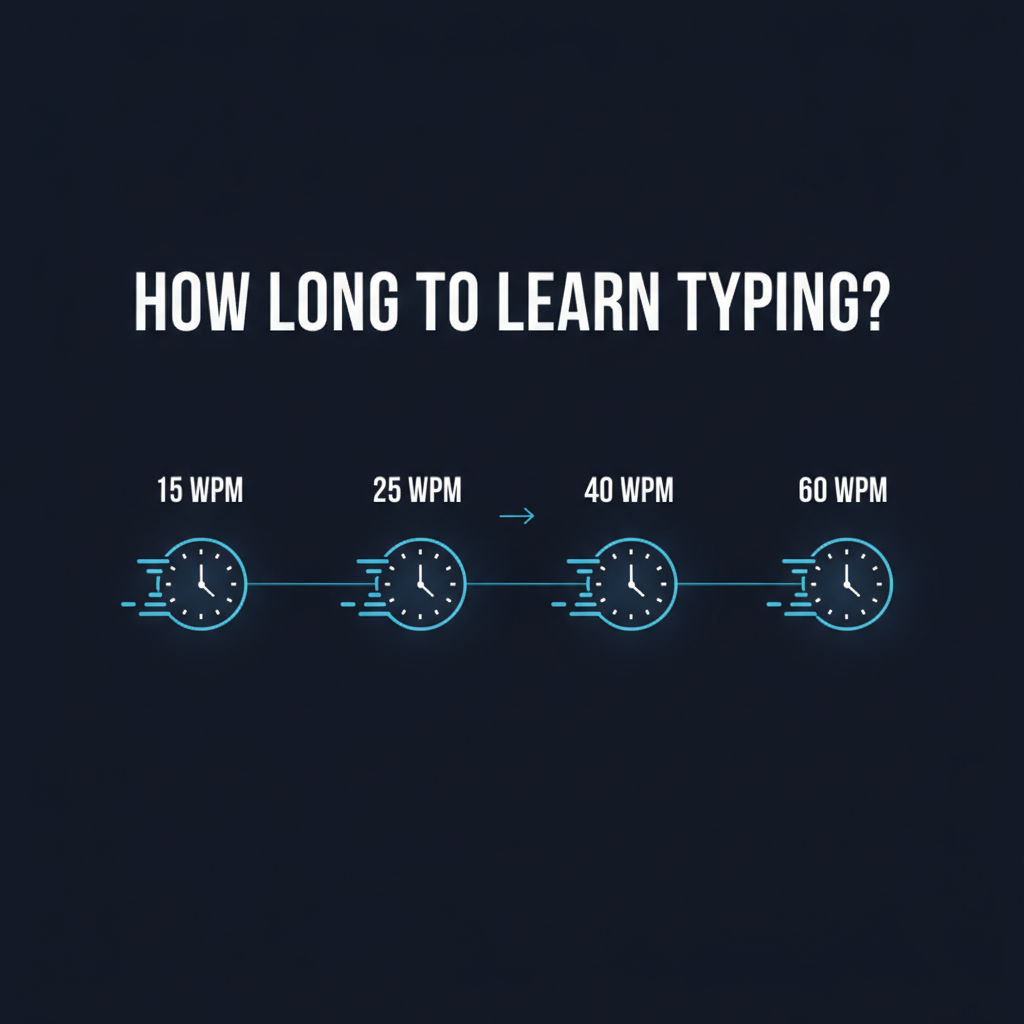
The Honest Answer
Most articles say "a few weeks." That is technically true but misleading. Here is what the data actually shows:
| Milestone | Total Practice Hours | Daily 20-min sessions |
|---|---|---|
| 15 WPM (basics) | 8–10 hours | 3 weeks |
| 25 WPM (functional) | 25–30 hours | 10 weeks |
| 40 WPM (office standard) | 40–50 hours | 4–5 months |
| 60 WPM (proficient) | 80–100 hours | 8–10 months |
| 80+ WPM (advanced) | 150–200 hours | 18+ months |
These assume deliberate practice — focused sessions targeting technique — not passive typing like chatting or emails.
Why "A Few Weeks" Is Misleading
Two weeks is achievable if you practice 2–3 hours every single day without breaks. In real life with work, school, and gaps, reaching 40 WPM takes most people 3–6 months of consistent short sessions.
The key insight from typing program data: practice frequency beats practice duration. 15 minutes daily produces faster improvement than 2 hours on weekends. Your brain consolidates motor skills during sleep — the practice-sleep-practice cycle is what builds muscle memory, not marathon sessions.
Factors That Affect Your Timeline
1. Current typing method If you already hunt-and-peck at 30+ WPM, relearning proper technique will temporarily slow you down for 2–3 weeks. This "learning dip" is normal and necessary. Push through it.
2. Age Children under 12 build muscle memory quickly but have shorter attention spans and smaller hands. Adults over 40 take 20–30% longer than young adults but reach the same final speeds with consistent practice.
3. Daily practice consistency The single biggest variable. Someone practicing 15 minutes daily will outpace someone practicing 2 hours once a week, every time.
4. Accuracy focus Typing fast with errors reinforces bad habits. The accuracy-first method — keeping errors below 2% before pushing speed — gets you to 60 WPM faster than speed-first approaches.
Beginner to 40 WPM: What to Expect Week by Week
Weeks 1–2: Learn home row keys (ASDF JKL;). Your speed will be painfully slow (8–12 WPM). This is expected.
Weeks 3–4: Add top row and bottom row. Speed dips again each time new keys are introduced.
Month 2: Fingers start moving automatically. Speed climbs to 20–25 WPM. This is the biggest breakthrough moment.
Months 3–4: Full keyboard fluency. Speed reaches 30–35 WPM. Common words start flowing as single muscle-memory units.
Months 5–6: With daily practice, 40 WPM becomes comfortable. This is the office standard and a major milestone.
How to Learn Faster: The Proven Method
- Accuracy first, speed second. Never push speed beyond where you can maintain 95%+ accuracy.
- 15–20 minute sessions daily. More effective than longer infrequent sessions.
- Use a structured program. Random typing doesn't build technique. Use LearnType's guided lessons for systematic improvement.
- Track your WPM every session. Without measurement, you won't notice plateaus until they've lasted weeks.
- Practice real words, not random letters. High-frequency words like "the", "and", "that" make up 50% of most text — drill them first.
FAQ
Is 40 WPM good? Yes — 40 WPM meets the minimum requirement for most office jobs. The global average for regular computer users is 50–65 WPM. See How Fast Should You Type? Average WPM by Age and Job for full benchmarks.
What if I already type without looking but I'm slow? You have muscle memory for bad technique. The fix is to deliberately return to home row position and retrain finger assignments. It takes 2–3 weeks of frustrating regression, then speed returns and surpasses your old ceiling.
Does it get easier after the basics? Yes — the jump from 0 to 40 WPM is the hardest part. Going from 40 to 60 WPM takes similar total hours but feels faster because the technique is already solid.
Start with our free typing lessons for beginners and track your progress from day one.
Written by
Mohammad Ismail
Keep reading
More in Touch Typing & Speed
How to Improve Your Typing Speed (From 30 to 80 WPM)
The structured plan to go from 30 to 80 WPM — accuracy-first method, three daily drills, weekly WPM targets, and the anticipation technique that breaks the 60 WPM ceiling.
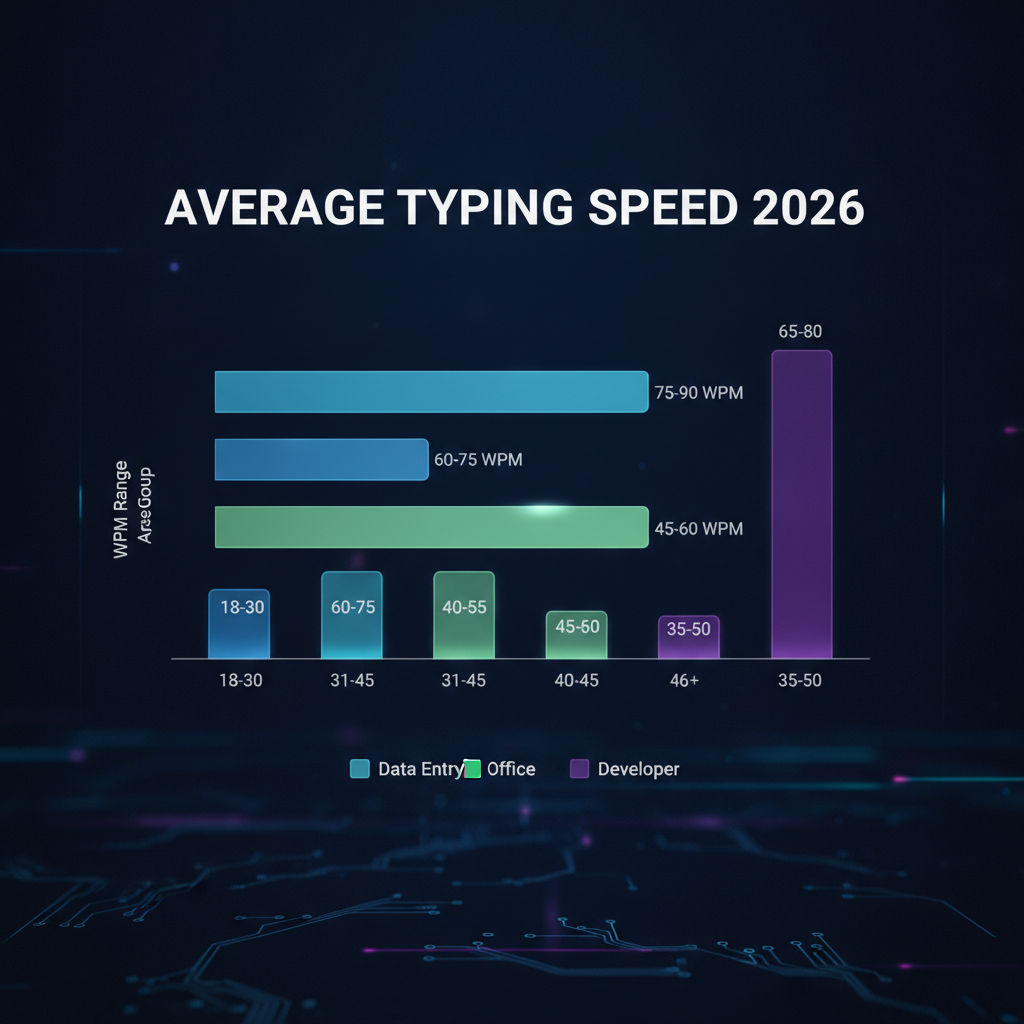
How Fast Should You Type? Average WPM by Age and Job
Average typing speed by age (8 to 55+) and by profession (data entry to journalism to govt exams) — with real benchmarks from 2026 platform data and how to check where you stand.
How to Learn Keyboard Typing from Scratch (Complete Beginner Guide)
Complete beginner's guide to keyboard typing — no special equipment needed, home row foundation, first-week drill plan, and the 4 habits that determine whether you succeed.