
How to Type Faster: 10 Proven Tips That Actually Work
10 specific, proven techniques to type faster — from fixing home row position to the speed burst method for breaking through 60 WPM plateaus.
Why Most Speed Advice Fails
Most "type faster" guides tell you to "practice more." That is not enough. Unstructured practice builds bad habits into muscle memory. These 10 techniques are specific, measurable, and proven.
1. Fix Your Posture and Hand Position First
Straight back, feet flat, elbows at 90°, wrists floating above the keyboard (not resting). Fingers naturally curved, resting on home row. Bad posture creates fatigue that caps your speed ceiling within 20 minutes.
2. Return to Home Row After Every Word
The #1 bad habit of plateau typists: fingers drift from home position. After every word, consciously return all fingers to ASDF JKL;. This feels slow at first but is what allows accurate reach to every key.
3. The Accuracy-First Rule
Never push your speed beyond where you can maintain 97%+ accuracy. Speed that produces errors is negative practice — you're training your fingers to make mistakes. Type slower, make fewer errors, let speed build naturally.
4. Drill Your Weakest Keys Specifically
After a timed test, note which keys caused the most errors or hesitations. Drill those keys in isolation for 5 minutes before your next session. Most typists have 3–4 keys that account for 60% of their errors.
5. Learn High-Frequency Words as Chunks
The 300 most common English words make up 65% of all text. When your fingers learn "the", "and", "that", "with" as single muscle-memory units rather than letter-by-letter sequences, those words take zero conscious effort. Use Typing Practice Paragraphs to build this.
6. Use All 10 Fingers — No Exceptions
If you are still using 6–8 fingers, you have a speed ceiling you cannot break through without changing technique. See Learn to Type With All 10 Fingers.
7. Practice With Real Text, Not Random Letters
Random letter sequences do not exist in real writing. Practice with actual sentences and paragraphs — your brain builds patterns for word shapes, not letter sequences.
8. Daily 15-Minute Sessions Beat Weekly Hours
Motor skill consolidation happens during sleep. 15 minutes daily × 7 days = 105 minutes that produces more improvement than a 2-hour Saturday session. See How Long Does It Take to Learn to Type? for the science.
9. Measure WPM Every Single Session
You cannot improve what you do not measure. Take a 1-minute timed test at the start and end of every session. Track weekly averages. Plateaus that last more than 2 weeks signal a technique problem, not a practice volume problem.
10. The Speed Burst Technique (Advanced)
Once you are above 50 WPM: set a timer for 30 seconds and type as fast as you possibly can, even with errors. Then immediately slow to your comfortable accuracy speed. Alternating between burst and controlled typing teaches your fingers that faster movements are possible and gradually raises your ceiling. Do 3–5 bursts per session.
Summary: The Fastest Path From 30 to 80 WPM
- Fix posture and home row first
- Maintain 97%+ accuracy — never sacrifice it for speed
- Drill weakest keys 5 minutes daily
- Practice real sentences, not random letters
- 15 minutes daily — non-negotiable
- Speed bursts once above 50 WPM
For a structured full course: Touch Typing — Complete 2026 Guide. For a speed benchmark: Average Typing Speed by Age and Job.
Written by
Mohammad Ismail
Keep reading
More in Touch Typing & Speed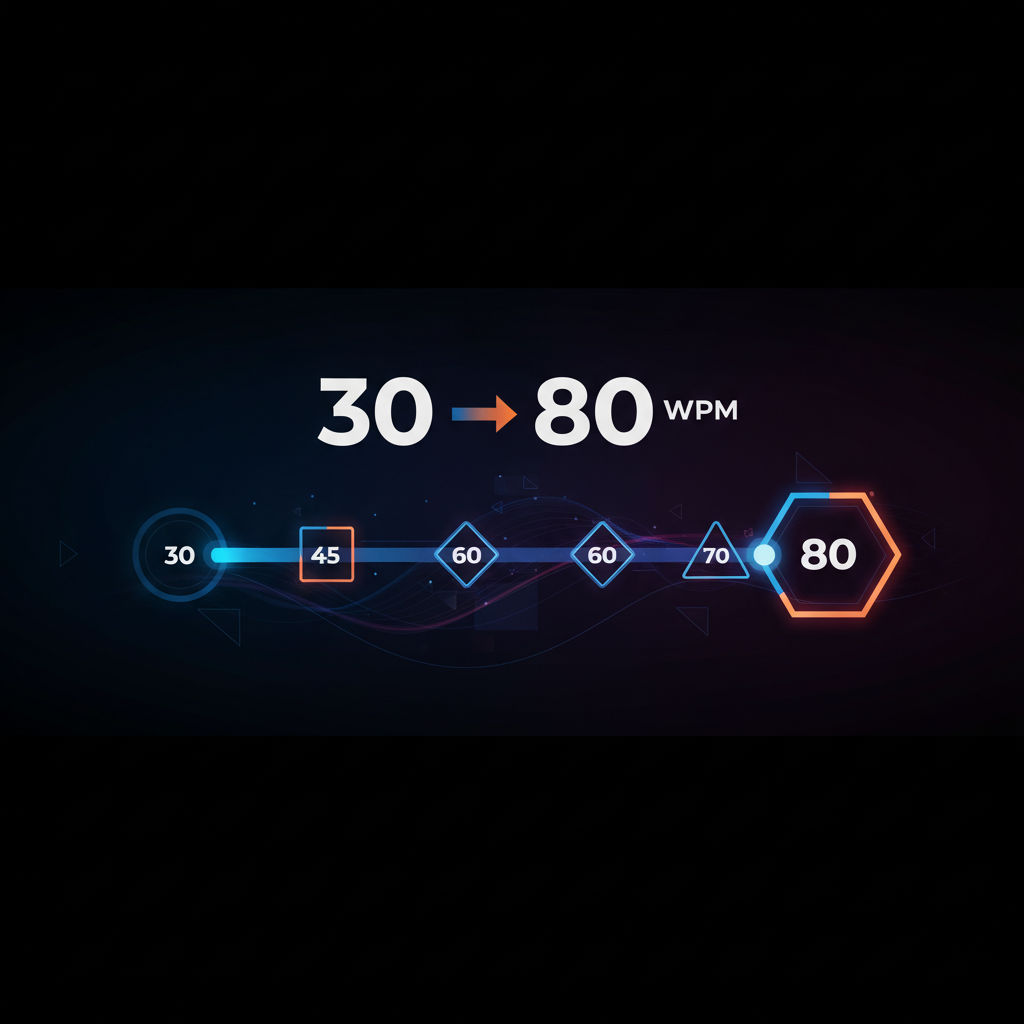
How to Improve Your Typing Speed (From 30 to 80 WPM)
The structured plan to go from 30 to 80 WPM — accuracy-first method, three daily drills, weekly WPM targets, and the anticipation technique that breaks the 60 WPM ceiling.
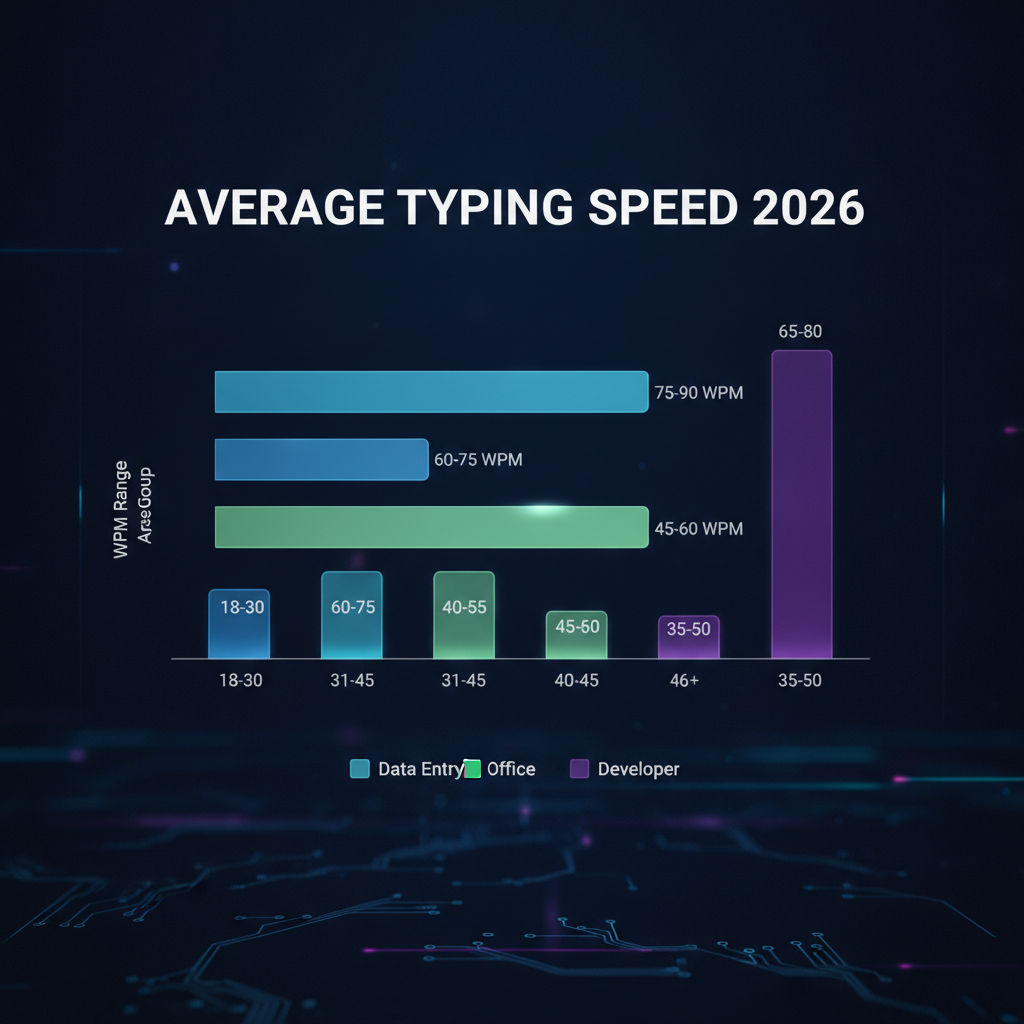
How Fast Should You Type? Average WPM by Age and Job
Average typing speed by age (8 to 55+) and by profession (data entry to journalism to govt exams) — with real benchmarks from 2026 platform data and how to check where you stand.
How to Learn Keyboard Typing from Scratch (Complete Beginner Guide)
Complete beginner's guide to keyboard typing — no special equipment needed, home row foundation, first-week drill plan, and the 4 habits that determine whether you succeed.